

Fixed Asset Accounting Explained w Examples, Entries & More
Goodwill is the portion of the purchase price that is greater than the fair market value of the assets and liabilities of the company that was bought. Goodwill is meant to capture the value of a company’s brand name, customer base, relationships with stakeholders, and employee relations. Companies must also periodically review their intangible asset values for impairment. For example, consider a fictitious acquisition in which one company buys another.

What are fixed assets?

The company being sold may have had strong brand recognition, thus fostering a goodwill intangible asset. If the buying company blunders the handling of the new company, that goodwill value may get lost if it does not capitalize on the asset it acquired. Under the declining balance method, a fixed percentage of the remaining value at the end of each year is calculated and deducted from the fixed asset. Under the IAS 16, there are two permissible methods for measuring a fixed asset’s value after initial recognition.
Examples of Fixed Assets
This is the expected value of the asset in cash at the end of its useful life. Depreciation is a systematic procedure for allocating the acquisition cost of a capital asset over its useful life. The loss on an asset that arises from depreciation is a direct consequence of the services that the asset gives to its owner.
Would you prefer to work with a financial professional remotely or in-person?
- For example, if a factory was initially purchased for $500,000 and has depreciated by $200,000 over time, its net fixed asset value would now be $300,000.
- It depends on the nature of an organization’s business which method best reflects actual use and the decrease in value of their fixed assets.
- These tools reduce human error, save time, and provide up-to-date information, allowing businesses to make more informed financial decisions.
- However, personal vehicles used to get to work are not considered fixed assets.
In today’s digital age, AI is making the process of calculating and managing net fixed assets much easier. AI-powered tools can automate the tracking of asset values and accurately calculate depreciation. These tools reduce human error, save time, and provide up-to-date information, allowing businesses to make more informed financial decisions. Net fixed assets are a crucial indicator of a company’s long-term asset value, reflecting the current worth of essential assets after depreciation and improvements. By understanding and calculating net fixed assets, businesses and investors can gain insights into the true financial standing of a company. Net fixed assets provide a realistic view of the current worth of a company’s long-term assets.
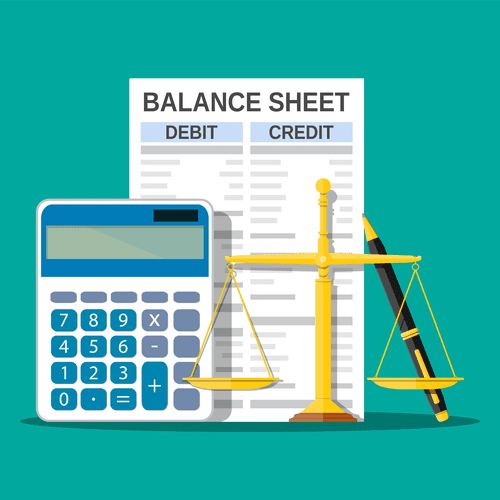
Tangible assets are usually recorded on a company’s balance sheet at their historical cost less accumulated depreciation. Intangible assets, however, are typically recorded at their acquisition cost if purchased, or at fair value if acquired through a business combination. Unlike tangible assets, which are subject to depreciation, intangible assets are often subject to amortization. A company’s balance sheet statement includes its assets, liabilities, and shareholder equity. Assets are divided into current assets and noncurrent assets, the difference of which lies in their useful lives.
Why You Can Trust Finance Strategists
- Fixed assets commonly appear on a company balance sheet as property, plant, and equipment (PP&E).
- Similarly, the inspection costs for assessing any faults in the fixed assets are also recognized as the cost of fixed assets.
- It’s achieved when consumers are willing to pay more for a product with a recognizable brand name than they would pay for a generic version.
- Depreciation is a systematic procedure for allocating the acquisition cost of a capital asset over its useful life.
- If Company XYZ shares drop to $50 each, the investor loses half of his or her money.
- When a company reports persistently negative net cash flows for the purchase of fixed assets, this could be a strong indicator that the firm is in growth or investment mode.
Any asset that is expected to be consumed in more than one year is considered a fixed asset. Another condition for a fixed asset is that it should be physically present and can be touched. This article will articulate the classification, recognition, measurement, and calculation of the fixed assets in the balance sheet of any business entity. Reports such as the fixed asset roll forward discussed above can be generated quickly with software, making analysis and research less of a cumbersome task.
- Amortization is the same concept as depreciation, but it’s only used for intangibles.
- Properly recording fixed asset entries ensures accurate financial reporting and adherence to accounting standards.
- Knowing how to calculate net fixed assets helps businesses, investors, and analysts assess the true worth of these assets on the balance sheet.
- Our positioning in China is reflective of this view, and we remain engaged with a long bias for CGBs.
- Choose the right SaaS solution by considering business needs, scalability, user experience, and pricing to ensure long-term success and growth.
- Although the aforementioned list includes examples of fixed assets, not all organizations will definitely use them.
Unit Of Measure For Recognition
Current assets are typically liquid and can be converted into cash in less than a year. Current assets include cash and cash equivalents, accounts receivable (AR), inventory, and prepaid expenses. Fixed assets are characterized by their long-term nature; they are expected to provide benefits to the company for more than one accounting period, typically over a year. Unlike current assets (such as cash, inventory, or accounts receivable), fixed assets are not easily converted into cash within a short timeframe.
Types of Companies With Tangible Assets
Both types of assets can be owned by a company and can hold monetary value. For financial reporting purposes, the business entities must record and disclose different standards used to realize, recognize, and calculate the fixed assets. It represents the assets owned by a business entity, liabilities owed, and the business’s equity. However, the classified balance sheet focuses on representing the assets and liabilities in a more elaborated way. Since fixed assets are used for a longer period of time, they are likely to devalue with use. Depreciation is the practice of accounting for an asset’s decrease in value as it is used.

Intangible Fixed Assets:
Within China, policymakers are easing monetary policy, providing demand-side subsidies, and managing the downside in the property sector. This stimulus is likely to prevent systemic risks and create a relatively stable macro environment. fixed asset accounting Our positioning in China is reflective of this view, and we remain engaged with a long bias for CGBs. We also hold long rates positions across the ASEAN region, where we see the largest impact of deflationary forces coming from China.